|
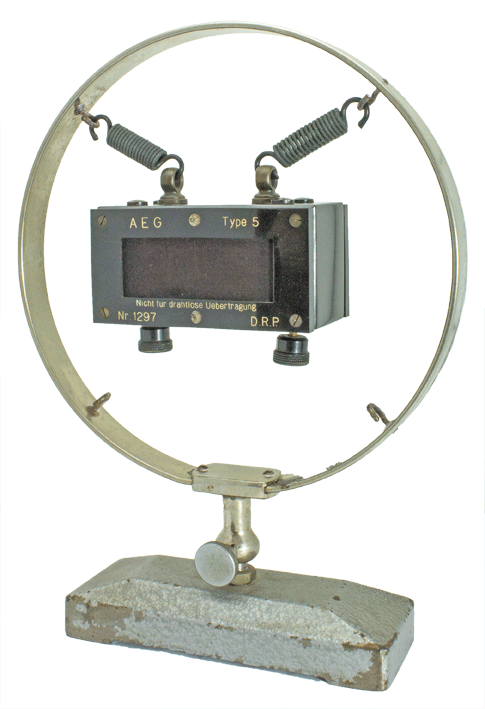
The 'Janus microphone', is a very distinctive model, it probably dates from around 1925-1930.
Reisz microphones hold a special attraction for me; these curious blocks were the first quality microphones made and used in Europe.
The German AEG company (Allgemeine Elektricitäts-Gesellschaft) was the parent company of Telefunken and the former employer of Eugen Reisz.
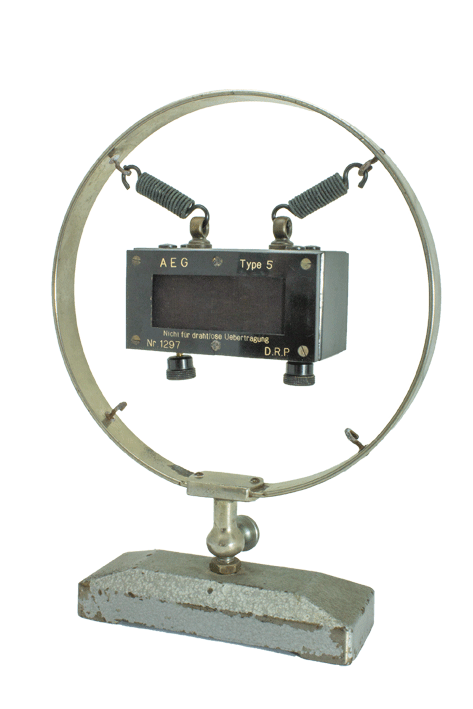
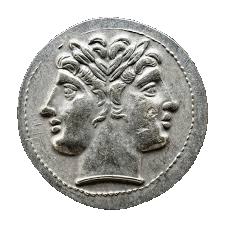
The microphones produced by Reisz were sold as Reisz, Telefunken, and AEG. The AEG Type 5 is a truly unique case: it contains not one, but two carbon powder chambers, one on each side. It was also issued by Reisz himself, as the Reisz type 105. The microphone features a single output in which both signals are combined. This makes it a 'Janus model,' a designation I derive from the mythical Roman god Janus, of beginnings and endings, opening and closing, who had two faces with which he could look simultaneously at the past and the future.
The AEG Type 5 is therefore two microphones in one. At a time when those microphones were quite expensive, that was probably a lot cheaper than two separate microphones. It also made it possible to use the microphone with two people, each on one side, which was of course very convenient. I have never seen an advertisement for it, but I can imagine that it was a selling point.
Another reason why this model was released is perhaps that in 1924, Siemens & Halske, another subsidiary of AEG, released the first ribbon microphones, one of which had a two-sided (figure-eight) pickup pattern. This 'Grosses Bandmikrofon' Rel.mph.1a was used for early German radio broadcasts, but proved not yet to be very reliable.
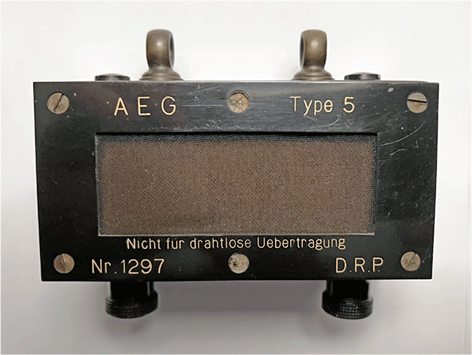
The AEG Type 5 had the same characteristics, but a more reliable technology, it was never used in radio studios though, because of contractual obligations that was only allowed to be done with Reisz microphones by Telefunken. On both sides of the Type 5 microphone it is therefor stated: 'Nicht Für Drahtlose Übertragung' (not for wireless transmission).
The Reisz microphones, supplied by Telefunken, were the safer option for German radio, they were used until around 1930.
The size of the Type 5 is small: 51 mm high, 100 mm wide x 52 mm thick; it weighs 647 grams. That is significantly less than the earlier Reisz M109, which was 99 x 120 x 35 mm and weighed 1.04 kg.
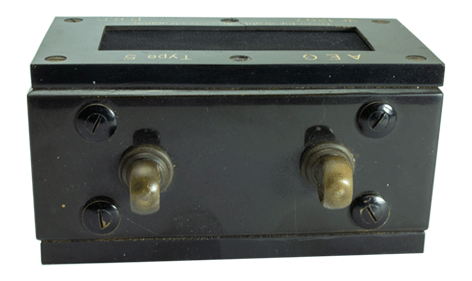
In the top-view image, the four screws cover the holes that are used for filling the microphone's chambers with carbon granules.
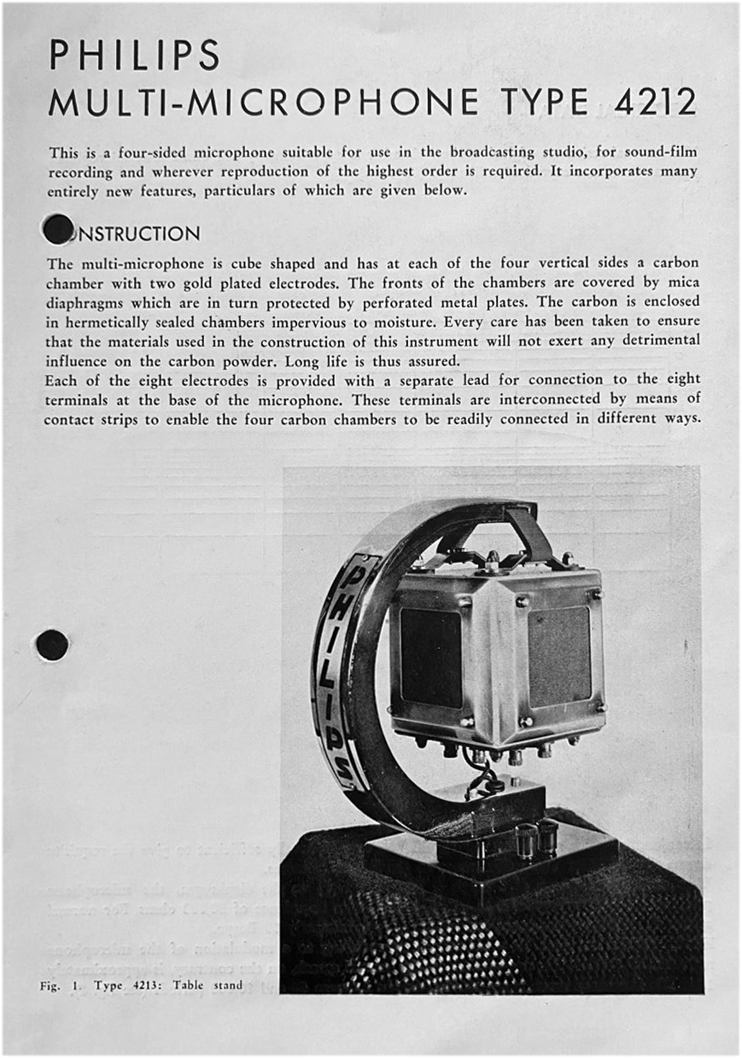
In any case, the AEG Type 5 is a remarkable device, which received a possibly even stranger successor in the Netherlands; around 1935, the Philips 4212 multi-microphone was released there, featuring no fewer than four carbon chambers (with four separate outputs), it was intended for radio and film recordings. Unfortunately, I have never seen a 4212 anywhere; I have only seen it in the brochure and in old film footage.
These curious microphones have disappeared into the shadows of history, but the dual use of ribbon microphones did stick around.
Condenser microphones were also later equipped with capsules featuring a figure-eight pickup pattern; recordings made with them reveal the recording space and often sound particularly natural. Philips also produced a fig 8 dynamic microphone: the 9528 (Mic of the month November 2018)
Many more types feature in my book Witnesses of Words. More information about that can be found at www.witnessesofwords.com
|
|
|
|
|
Above: the two sides of the AEG Type 5 'Janus microphone'
Below: sound, a closer look, top view, Roman coin with Janus & Philips 4212 Multi mic
|
|
|
|
|
|
|



 Video's
 Contact